
Proboscing Planetoid Sassafras
an interview with Stephanie Klein


Imogen Binnie famously wrote “while gender is a construct, so is a traffic light, and if you ignore either of them, you get hit by cars.”1
Meanwhile, Stephanie Klein seeks to deconstruct the rules of traffic, remap the street, and indeed disintegrate the mind that allegedly constructs this analogy. To do this, the author aims their harpoon, barbed with the avant-garde, at the nucleic heart of life itself. The body—every body—must be dissected in order to operate on the reality it generates. The allegorical concrete dissolves into an endless torrent of surfaces, alternatively hard and soft, evoking every kind of erogenous flesh imaginable. This traffic light never stops flashing GO!
The title of this emerald beacon? Planetoid Sassafras. Fourteen chapters of prose and poetry composed from interspecies pheromonal discharge. Purple prose? This shit is tumescent. Engorged. This is pataphysical excess dripping from slimy lips (both kinds!), its author totally unhinged yet firmly in the saddle. It’s fucking fun, dude. So fun, in fact, that I simply had to know more.
Stephanie Klein agreed to an interview, but undiluted exposure to their Sassafrasian DNA proved hazardous to the localized biosphere of my species, so I sent my parafictional cipher and ofttimes oaf, Doctor Bendigan, into the field. He was declared “too stupid to brainwash” by the CIA, and thus appears marginally immune to Sassafrasian biopsychotic influence. He still went crazy, but I don’t think it was Klein’s doing.
*This interview has NOT been shortened for clarity—in fact, it has been lengthened for befuddlement with random diatribes by the editor.*
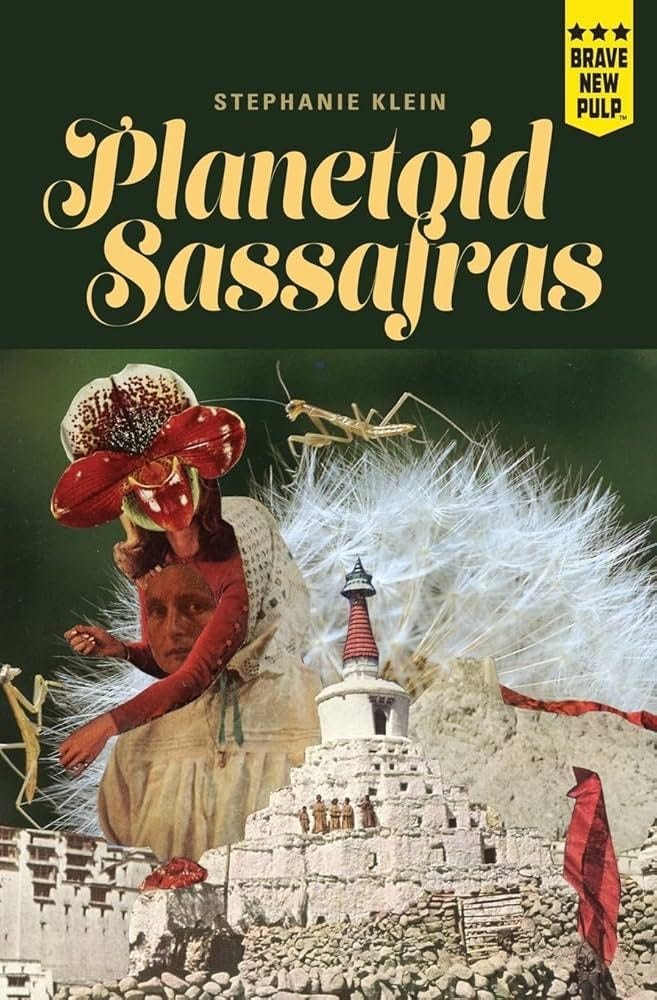
Cover art by Hazel the Tree. You can find more of their work here.
INTRODUCTION: Stephanie Klein was born in the city of Atlanta but spent the majority of their formative years in the wild nowhere-lands of rural Georgia, where they befriended a possum, a tick, and a slug. Their discovery of surrealism led to experiments in automatic writing and collage, and to a general disordering of their senses.
Stephanie has been involved in surrealist activity for the past decade, including work with Peculiar Mormyrid Journal and the Atlanta Surrealist Group. Their first book of fiction, Planetoid Sassafras, was published by Montag Press. A subsequent book of surrealist nonfiction, AMOK, was published by Trapart Press under a pseudonym.
Stephanie lives in an unending pursuit of the marvelous, and they hope to abolish capitalism one day.
You can follow them at Hermetic Tardigrade.
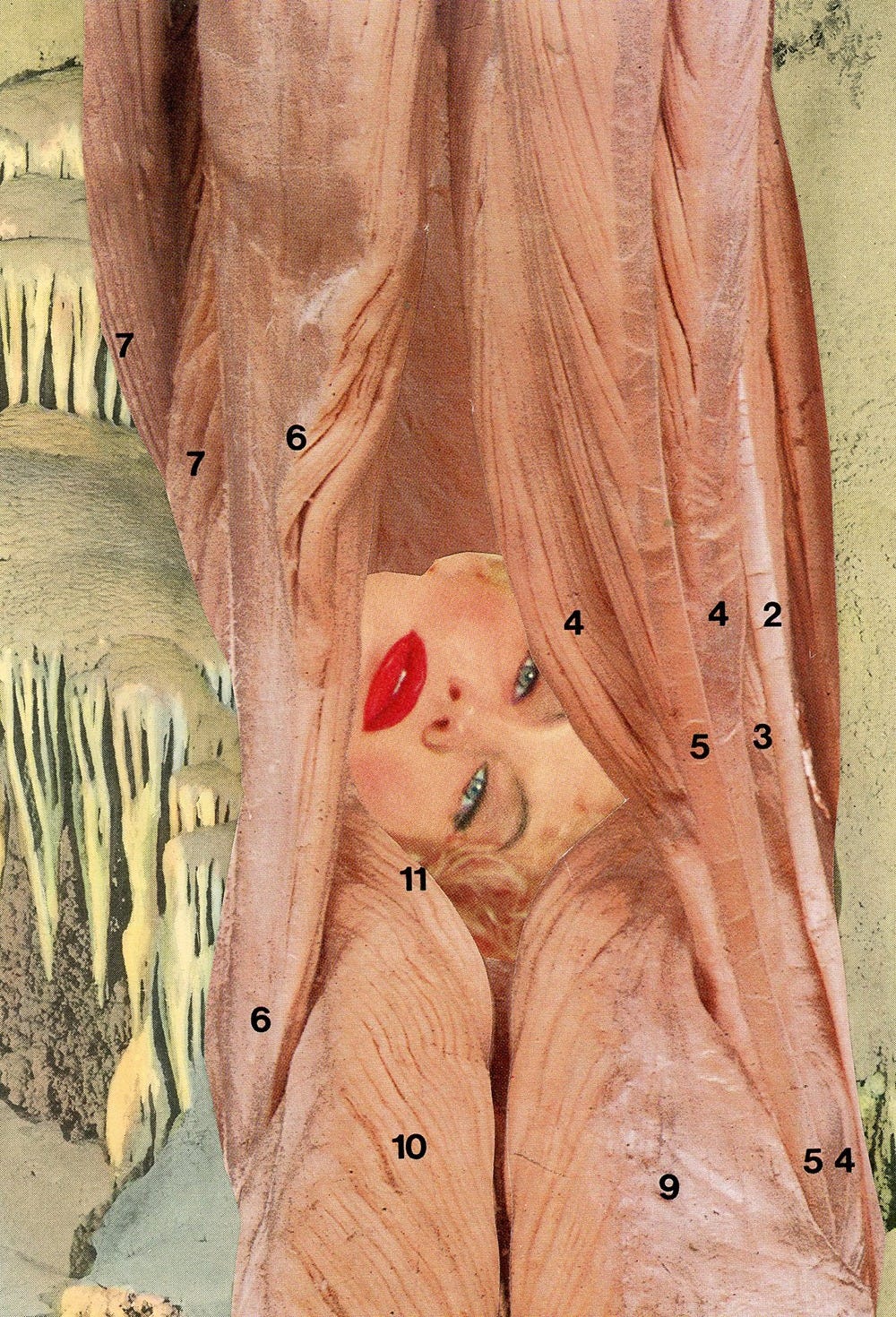
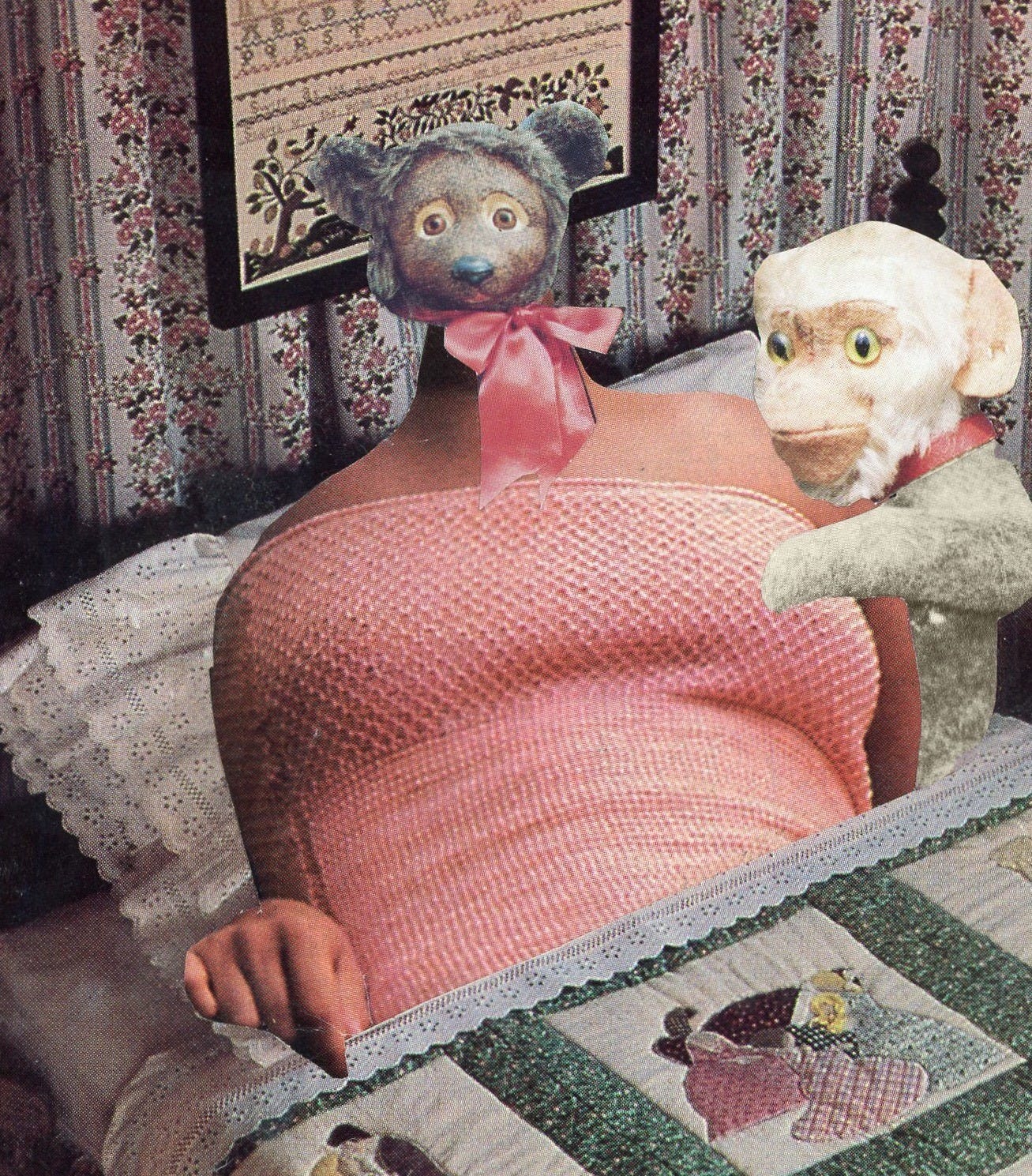
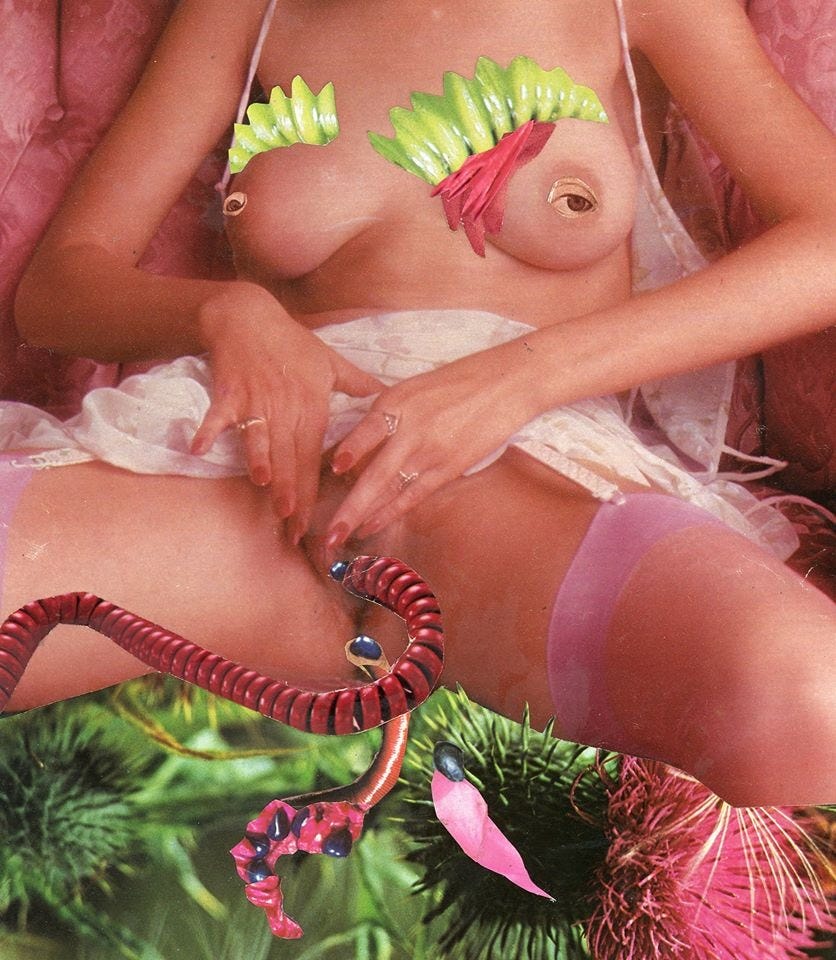
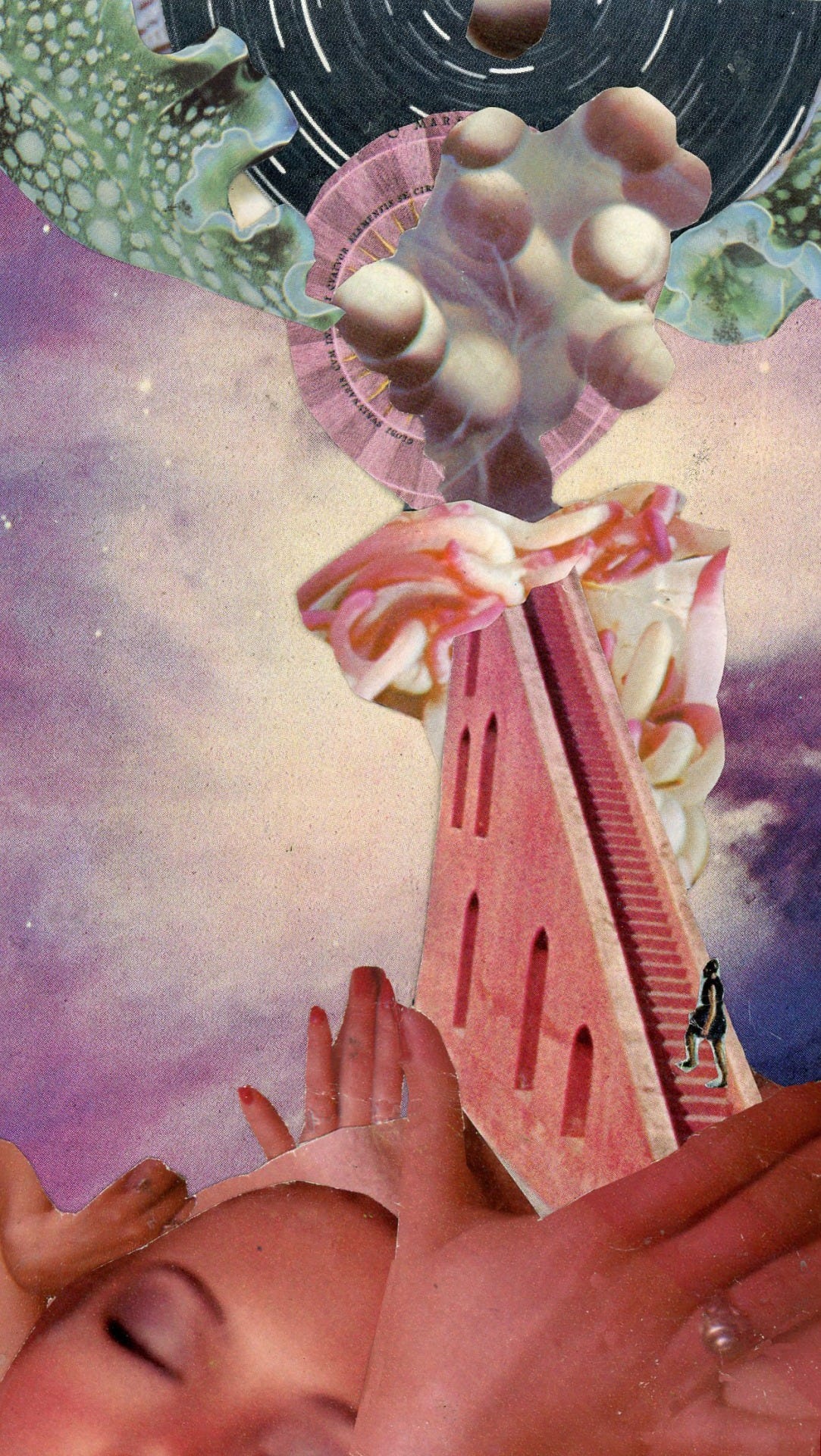
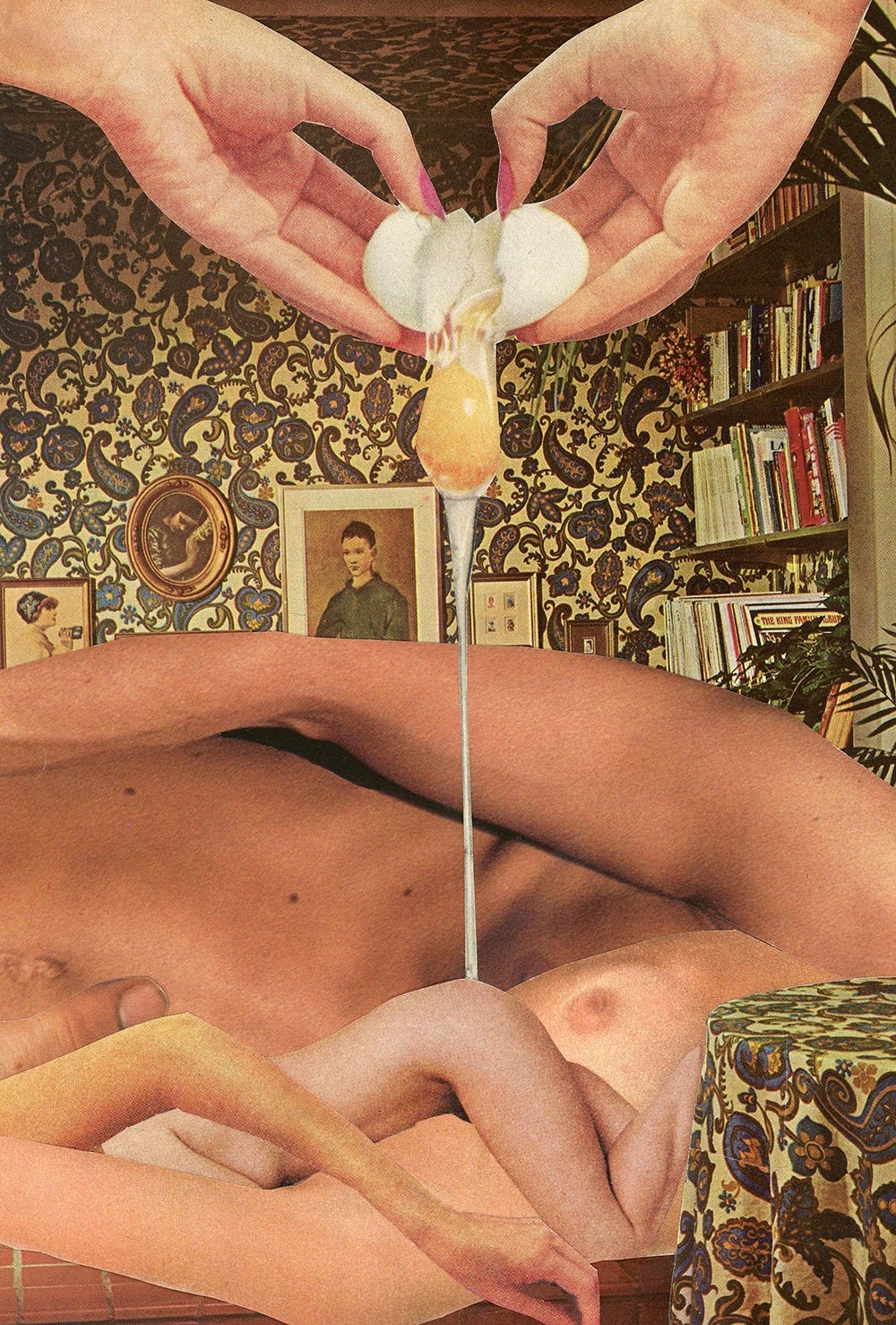
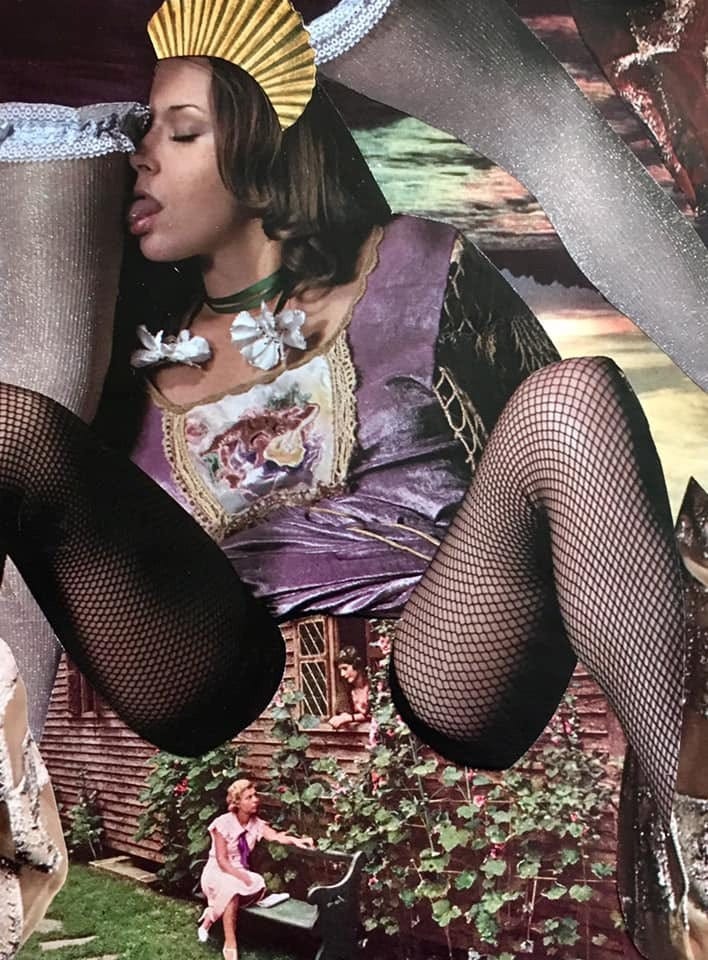
from here ‘til the end, the visual art is by Stephanie Klein
Doctor Bendigan: Hello, Stephanie. My name is Benjamin “Doctor” Bendigan. I’m a pataphysician specializing in word-viruses. It’s very nice to make your acquaintance.
Stephanie Klein: Hello..?
DB: Thank you for accepting my offer to be interviewed and for selecting the meeting place. I’ve never been to an astral plane cafe. This looks like the kinda joint where you’d see mugwumps eating naked lunch—nyuck, nyuck, nyuck! <coughs nervously>
SK: <coughs viscously>
DB: So, you’re somehow responsible for the Earth psychosphere achieving cognizance of Planetoid Sassafras. I myself discovered the celestial corpus one night, when my telescope was (accidentally!) pointed at my hot boss’s bathroom window. The intensely awkward sexual tense spontaneously generated a perfect reconstruction of your book in a petri dish I had reserved for experiments in ero-thanatan trajectories. Which I guess the planetoid is. Is it?
SK: I can neither confirm nor deny; however, I do believe you’ve just engaged in grievous spermazoidal copyright infringement. You naughty boy!
DB: Y’know, most people I meet end up suing for one reason or another. No farm, no fowl. Enough dillydallying, I need to open with the hard question, the one literally everyone is asking, no avoiding it, here it comes: Why did you dedicate the book to “amorphous and amorous the leopard slug”?
SK: Basically, that clip of David Attenborough narrating slug sex had a big impact on me and my life. It’s one of those obscene, reality-breaking images that just sticks with you. For some people that’s watching the Twin Towers fall in middle school during first-period. For me, it was watching twin hermaphroditic slugs.
DB: Whoa, for real? That was disarmingly personal. I totally thought it was because it sounded silly. If you’ve read my work, you know I love transpositional wordplay, so I was tickled by the “amorphous and amorous.” Wow, ice broken. The book is allegedly a work of “surrealism,” as is your visual art. Could you define “surrealism” in your own words?
SK: Surrealism is a tasty bit of ectoplasm brought back from the void during the “period of the sleeping fits”, circa 1920s Paris. Robert Desnos was a rather idiosyncratic medium and instead of coughing up a white, viscous and somewhat useless substance as is usual in these cases, brought back an entire body of thought called “Surrealism”. I, being a rather devil-may-care tumor in the mid-aughts, consumed a small but potent subsection of Surrealism’s expectorated body which I’d found washed up on a Sassafrasian beach. This was around the age of 19 or 20. It vibrated my hair follicles so completely that I don’t know where or what I am now. Do you?
Thought I was kidding about the diatribes? If you’d like a primer on the trajectory of surrealism across history’s sky, Alexander Billet wrote a lovely, well-researched piece for Against The Current. In it, he cites Margaret Cohen’s 1993 book Profane Illumination calling mid-century surrealism “a gothic Marxism.”
Klein has picked up this thread in particular and uses it to floss every orifice available. Gothic Marxism is fucking right. On Planetoid Sassafras (the planetoid, not the book), years are measured “after Marx.” Revolution is a constant sibilating tone across all dimensions. Even a character’s immune system experiences an upending of labor and gender freedom. A girl can dream, right?
For avant-garde movements like surrealism (Klein’s bag) and absurdism (Bendigan’s bag), a paradox can agonize the fringier elements: a polarising battle between taking the mission seriously and throwing all rules out the window then pissing out the window (but not caring if it lands on the rules, because you don’t care about anything).
The lifecycle of cultural resistance can fit a predictable model: the status quo grows stagnant—a free radical aesthetic breaks off like coral polyps and is allowed to make its appropriately annoying sound and fury—this is for the benefit of the status quo, which has studied the resistance and metabolized an immunity to any fundamental change—finally, the powers that be reabsorb the offshoot and start playing IRA ballads in Anthropologie at the mall. This way, the status quo remains unthreatened and the counterculture defanged.
Aware of this strategy, nonconformism grows more militant. “Exterminate all rational thought!” cry the comrades for psychic liberation. Any fanatical adherent of the anti-arts risks ironic capture when their obsessive fervor with undoing all “seriousness” itself becomes the crusade they rage against. The agenda becomes overly concerned over the reception of the spit one hawks in the eye of good taste. Some people end up taking silliness so seriously their whole deal becomes an inside-out mockery. Clown shit.
Klein does have an agenda2 but does not fall into this trap, instead following an unrepentant approach to the material that can be summed up as fuck it all (every definition applies). In Planetoid Sassafras (the book, not the planetoid), the militant axiom gets translated into a basic desire to abolish gender absolutely—embrace the flesh in totum. There is nothing else, for the body is reality <~ a sentiment cribbed from Papa C’s Crimes of the Future. Fitting that Videodrome has been dubbed a work of “techno-surrealism.”
Klein enjoys leaving the fingerprints of their mentors all over the work, a practice I too lavish in, naming and referencing the writers and artists who inspire my personal psychotronic pocket universe. There’s something of a pompous flex there: look at all the freaky shit I know about? Chicks dig a know-it-all. Come know all, too. You get this deep by rooting around and tasting what the weirdest weirdos are spitting. Especially the queer ones; they have simply got The Goods.
Stephanie Klein wants us to reclaim the bodies that have been colonized by the forces of control. Not just human bodies, but all of them. The ladybugs, lilliputians, cordyceps, and meteors in outer fucking space. All of them need to be free. What from? You’ll see. It is a breathtaking prophecy of all-consuming freedom beyond conscious thought, and we’d do well to learn from it.
On Planetoid Sassafras (the planetoid, not the book), all anti-capitalist arrangements of society exist, like layers of nutritious sediment in the cosm’s psychostrata. But utopia is not a state, it is a motion (did Le Guin write that?), the push against dystopia’s pull. The diverse populations of Other-Folk do indeed recapitulate class disparity and carceral mindsets here and there. These are treated as bemusing stopgaps in the ongoing orgy of Creation. When tyranny creeps up, revolution always follows, as surely as the moon rises to splice the night with light.
DB: Yeah, sure that’s really interesting, hey, sorry to interrupt, but we haven’t been asked for our orders? How does this cafe work?
SK: Just grab the pickleworm and squeeze. No, no, the purple one. Caffeinated beverages are a bottom half squeeze. Pastries are ⅔ of the way up the tip.
DB: Oh, I see. <grabs pickleworm> In that case, I’ll have an iced oatmilk latte. Dairy’s been disagreeing with me ever since I invented a species of cheese that seeks revenge. Thank you! Could you list obvious influences? Ones that would make people say, “yeah of course that inspired you, duh, why even say it.”
SK: Bataille is an obvious one I guess, surrealists like Luca and Péret were also major points of inspiration, not to mention I was reading some Vandermeer at the time. Naturally, b movie horror and scifi had their part to play, as well.
DB: Could you list NOT obvious influences? Ones that would make people say, “what the hell really?!”
SK: I have a large collection of humanoid medical textbooks which I use for collage; the most graphic of which has a gynecological orientation. A lot are vintage, and the black and white photography makes the injuries and diseases look strangely beautiful, cosmic even…One of the stories in Planetoid Sassafras was originally printed out as a zine, and contained some of these images.
DB: Rad. Honestly, those also sound like obvious influences; I thought you might say something like the Kardashians (now there’s body horror) <sneezes strangely> Latte’s here. Tastes like an oat sowed its wild oats. Didn’t know what I expected… Eh, I’ll live (fingers crossed). I notice you didn’t mention David Cronenberg on that list of obvious influences. I’m gonna call bullshit, seeing as the book includes a lengthy quote from Shivers (alt title They Came From Within [script title Orgy of the Blood Parasites3]):
“...everything is erotic, that everything is sexual. That disease is the love of two alien kinds of creatures for each.”
Pretty sure she says “all fresh is erotic flesh,”4 but all the same. This thesis is foundational to both Papa C’s entire filmographic project, as well as Planetoid Sassafras as a hole—<ahem> a whole. Please expound on how Cronenberg informs your writing?
SK: I’ve always been a sucker for art that functions as a drug trip, or visionary experience. Even unpleasant ones. Lynch, Cronenberg, and Philip K Dick all fit that bill. All of which I discovered as a wee sassafrasian in my first year of spore school. Cronenberg hit me hardest though, and rewired my mind. I think it was the addition of the body element. Perhaps he tunnels deeper into the core problem that all three are orbiting. The “What is reality” question remains unfinished without the “what is this freaky flesh suit” question stapled on top…
DB: Ah, Cronenberg and Lynch. Strong name, David <wank!> Pardon me, <wink!> I really like that; the visionary art of Lynch and Dick go to disembodied places with a dream logic characteristic to surrealism. But Cronenberg made his fame from never stepping out of the flesh pool, and indeed reminds us that we never do. It’s the body’s logic that informs all this dreaming. And that’s the garden where you tend your Sassafrasian seeds. Love it. Now we’re cookin’! Try not to leave out answers from now; I will catch them. Did they dose my oat? I feel kinda funny. I’m sinking into the chair, its labial velvet folds engulf my unfortunately tiny tushy. Feels like a reverse-birth. Do you want to stop or keep going?
SK: Let’s keep going, but do you mind if I salivate?
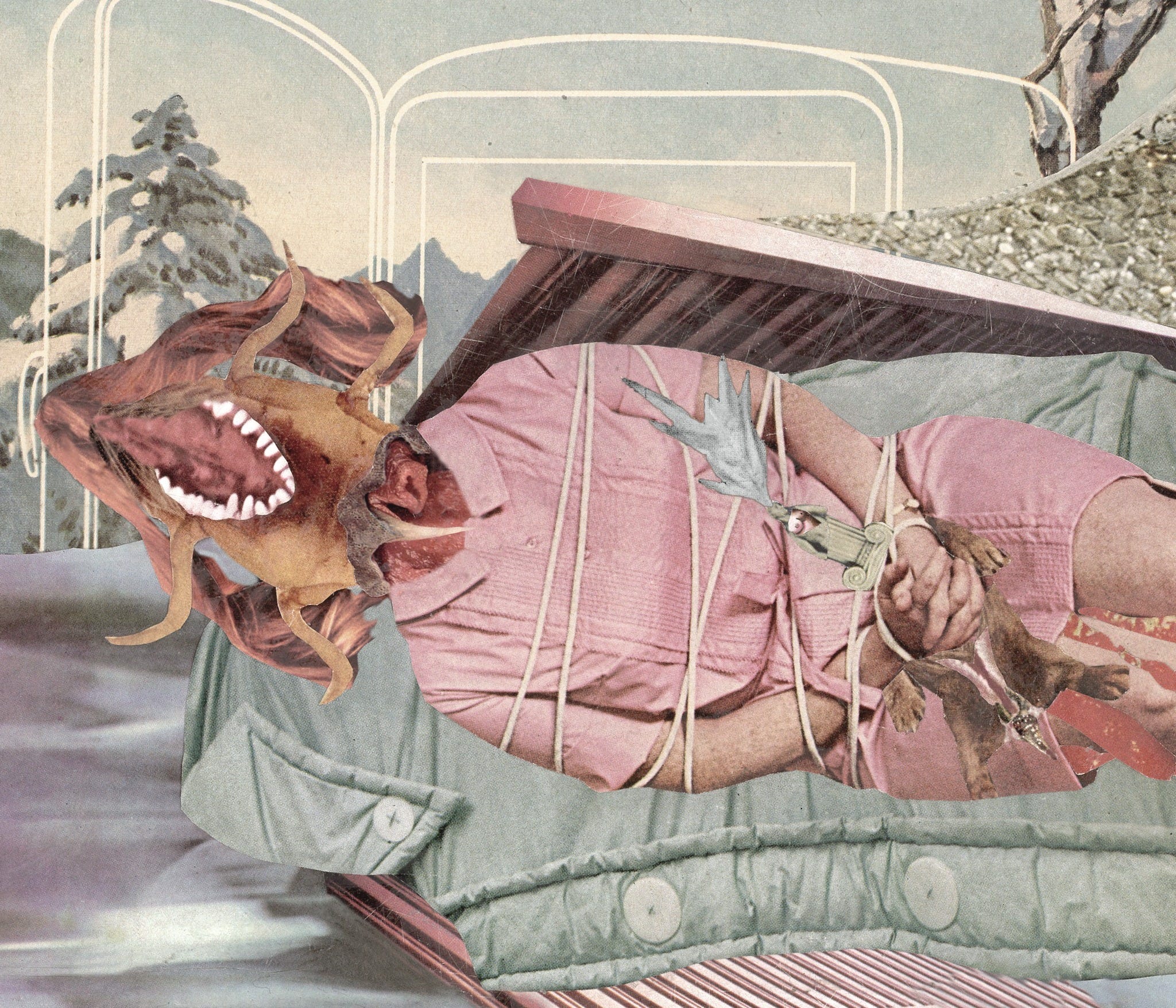
Planetoid Sassafras is a perfect title for what the book is: one-half a pseudoscience-fiction excavation of improvisational genetic engineering, and the other-half a surrealistic wonderland of lexical free association. All in all, a bio-anarchic and anarcho-verbal extravaganza!
Whole worlds and genres will transform mid sentence with a cheeky t’wink. There is schlocky B-movie material delivered in a mock zoological textbook tone. There are plentiful dream sequences and random childlike fantasies and so, so, so, so many sex scenes. This polymorphic carnival is interrupted frequently by a fourth-wall-breaking third-person omniscience with observations, clarifications, and lots of jokes. The narrator will even skip important scenes just to spite the reader.
The chapters are like stem cells, an infinity of biological potential encased in miraculously tight spots, the tightness required for genetic material to burst out and become the next something. Genes unwind and pierce jeans and rewind to wrap new presence. But enough beating about the bush: the sex scenes. Capital “P” Pervert shit. The characters swap sex organs, flip genders, changing names and pronouns with aplomb. Bizarre biochemical formulas illustrate the new configurations of identity being invented and shed as easily as underwear.
Klein’s sexual vocabulary is nothing short of titillating. Slutty slits, critter clits, crafty shafts, and officious orifices. Nothing is off the table; in fact, the table is slathered with procreative intent. The butcher’s offal sluice is but another birth canal for the next hole, the next shape. Partners of every imaginable variety, including the voyeuristic Lascaux Cave Mind, come (lol) into play. All is laid bare. All bears5 get laid.
You would think reading so much explicit material compacted into one book would start to chafe, but redundancy itself is the flavor base tasted in the rhythm of a satisfying fuck-thrust. Klein finds a way to keep it fresh. One story Freud gets a blowjob from his girlfriend, Jung, but every salacious term is replaced with a desexualized word. It builds to an amazing anticlimax (ba-zing!). It’s funny, thought-provoking, and yes: hot.
One of my favorite lines is a command to Become Pansexual Jelly. Just one of the many nucleic statements you can shave the book down to in order to read its fundamental genetic code. It’s as if the collective subconsciousness got puked out by the first creature to crawl on land, then it used the vomit to scry the future of all life in the galaxy.
Some stories are more (pardon the paradox) traditionally surrealist than others. They can warp something fierce but circle back to their stem like an organic structure programmed to resolve its loop; others transform into new shapes and completely shed the old context, a trusty tool of the card-burning surrealist.
And that’s one of the silliest aesthetic flags for surrealism, isn’t it? An image combined with another in an illogical context, forcing open a third-mind connection. Place this thing next to a thing it has no business being next to, and you’ve suddenly broken a taboo that can range from nonsensical to scandalous. Klein understands the power of words and images, and they wield their acumen with effortless effervescence.
There is something so fearless about the writing. It’s the best kind of unhinged, opening the window for every idea, small and large, to peek inside. None of it stinks, except for the range of smells that are described in toxicating detail. The wordplay really does feel like play, and it invites you to join, to push through the page and feel the book’s vulva squelch beneath your fingers. Taste it.
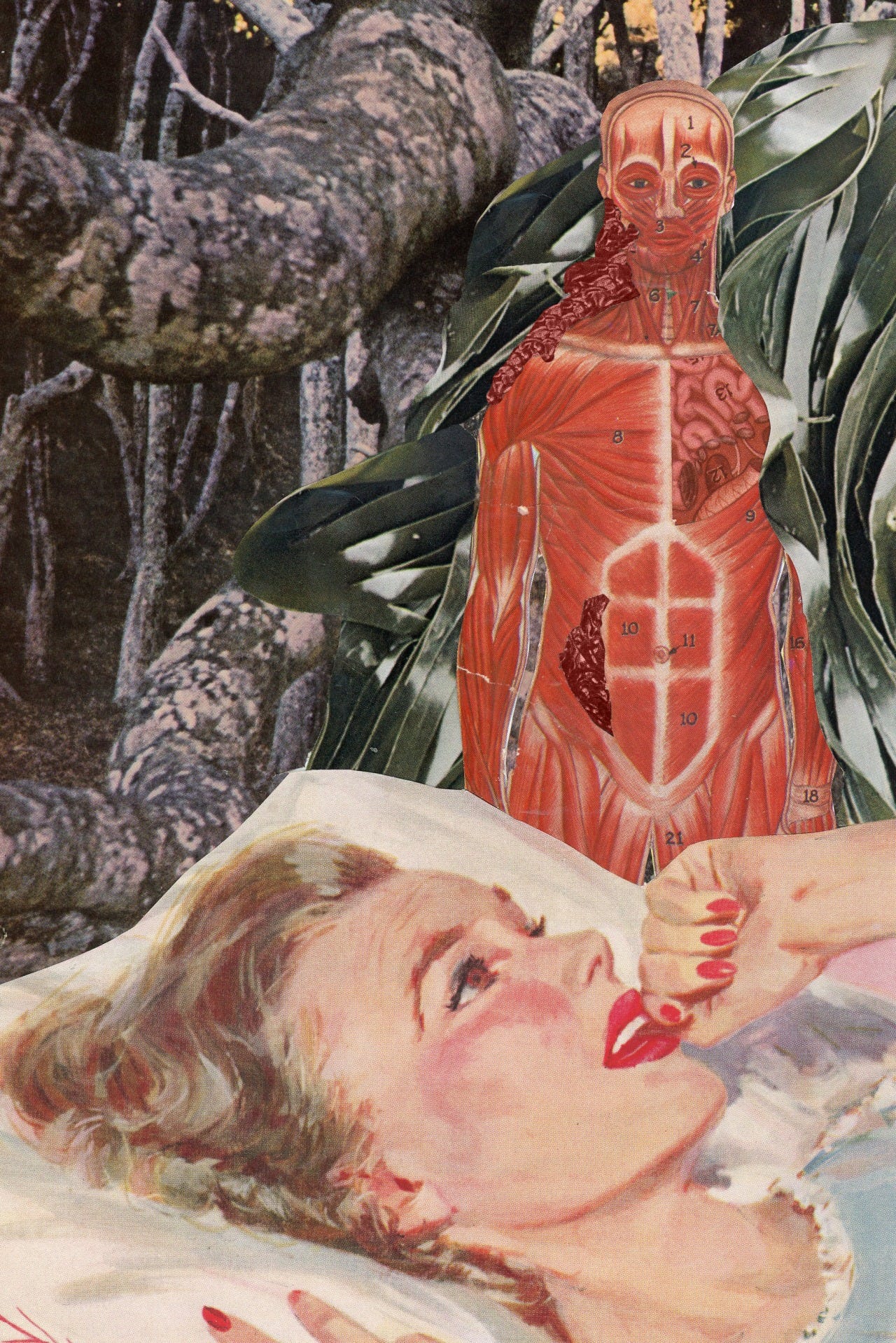
DB: What is the sexiest part of the human body?
SK: Probably hair. Honestly, I wish y’all humans were just hair, might as well just skip the smooth stuff. Cousin Itt makes me drool.
DB: Gross. What’s your favorite type of surgery and why?
SK: Top surgery, surely. Or any kind I get to watch.
DB: I prefer bottom for reasons I’ll explain later. Sorry again to interrupt, but I’ve sunken so far into the chair that I’ve discovered a whole underworld beneath my chair cushion. I assume we should go on some katabasic sojourn and return with greater knowledge of ourselves. Can you describe what’s in the under-chair world? I spilled my goddamn latte on myself.
SK: A glass pyramid is dripping with possum and teal ejaculate. Cross-fade to a golden bird holding the core of your brain in a jar, and wiping its ass with it. Beneath this? My grandma’s third spinal column, waiting. Knitting.
DB: <finishes wiping latte> Trippy. Sounds like a metaphor.
SK: A meta for what?6
DB: Har. har. Okay I’m going down to get my brain back from that goddamn bird. The Planetoid is absolutely stuffed with references from Freud to Xibalba. Did you do a lot of research specifically while writing, or were these topics you had knowledge of beforehand and were able to simply gush into the writing? Additionally, when you were learning stuff, what was one fun fact that particularly delighted you?
SK: A side effect of the excited manic state I wrote it in I think – I’d just been word-constipated for so long and it all came flooding out. An enema of ideas. I can’t recall doing any specific research, except reading Bataille’s Tears of Eros. A real nice one.
DB: Okay, so the bird flew down into what your grandma was knitting, which turned out to be an enterolith—intestinal stones that form in the gastrointestinal tracts of horses. Now, we’re in the stable assisting the equine veterinarian removing one. But we don’t have any gloves (or clothes at all). The rigamarole transformed into a fresh context that has became our new reality. This ain’t a metaphor, it’s a pataphor!
SK: A pata for what?
DB: That’s the same joke, silly!7 Now correct me if I’m wrong, but I suspect your book is… queer. Right?
SK: Queer as a clownfish in heat, haha.
DB: Nailed it. The community knows I’m an ally. I used to be a foremost sex-assignment (do they still call it that?) surgeon, but I got so good, I started experimenting. Kept giving people genitals that never existed before (told you that bottom surgery thing was gonna play out). The institute in charge of building bathrooms had me run out of the business, because it was too expensive to invent new types of toilets to keep up. Sorry, trans-folk!…
<awkward pause where Bendigan is perhaps waiting for his apology to be accepted>
…But on that topic: your stories contain all manner of liberatory gay sex. More than once, an orgasm triggers radical & revolutionary action in the wider world. Is the flesh a prison which sex can transcend? Or is coitus a way of uniting spirit with flesh in the way the Creator meant for it to be used? Or—I don’t even know what I’m asking. I’m on a fucking ramble. Tell me something about gender, or something.
SK: Flesh itself is Holy, the best thing since sliced bread. That first microbe 3.8 billion years ago was also the first fucking saint. I think the gods probably envy us. I know the rocks do. You can see ‘em sneaking a peek while we copulate on their backs. I guess I’m a nietzschean really–all about that “Yes-saying” to life. But a new, hornier type of nietzschean. And gender, what of that? Gender as prescription is meaningless at best and false imprisonment at worst. It’s gender as potential that interests a sassafrasian imp like me. Gender as profusion, as infinite variations, as melding together and branching out. It’s gender as artistic medium with which to better experience our flesh-mad destiny that makes my cockle bark in ecstasy.
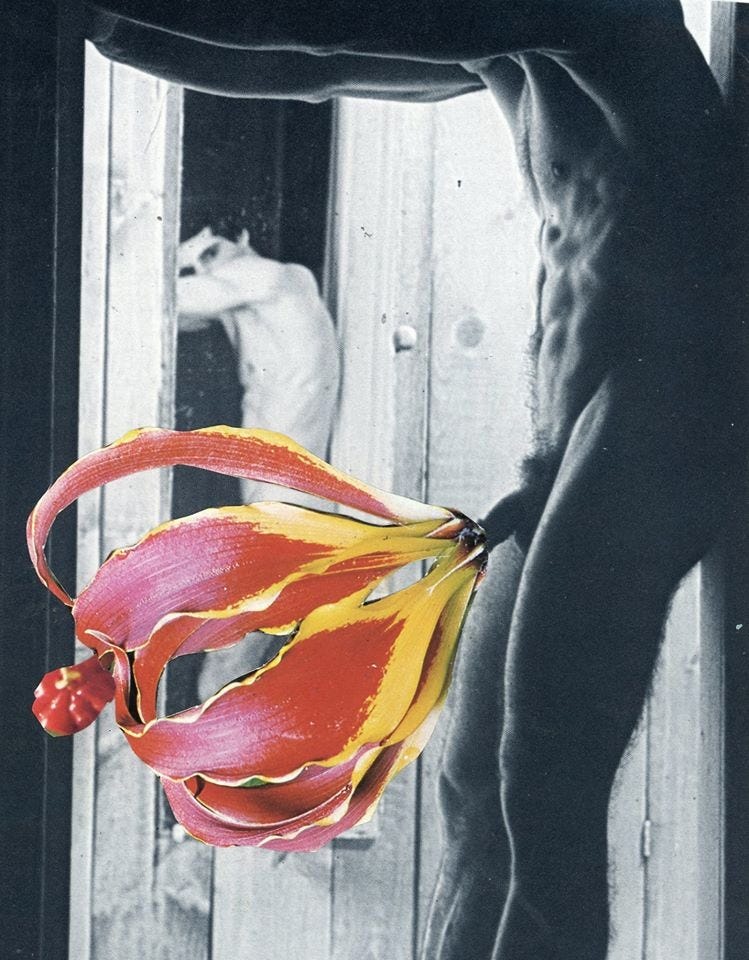
“That first microbe 3.8 billion years ago was also the first fucking saint.”
This line here. It drives me nuts because it diametrically opposes the notion animating the mental breakdown that dogged me all of 2017 (a crack in my brain which gave birth to Doctor Bendigan [don’t tell him I said that]).
The antithesis of Klein’s apotheosis has been ringing in my ears like the hallucinated screams of a schizophrenic brain: “God is a rapist, and we are made in His image.” It’s the keystone of a cosmos begging for death. I don’t want to regard the world this way, I am beset by this perspective. It harries me. It is imposed upon me by the atrocity exhibition that plays out day by day in our shared corner of reality. From penguins to presidents, this planetary parade of pedophilic incest that we’ve named “the human race” refuses to lent up its pace. Fucking hell, man.
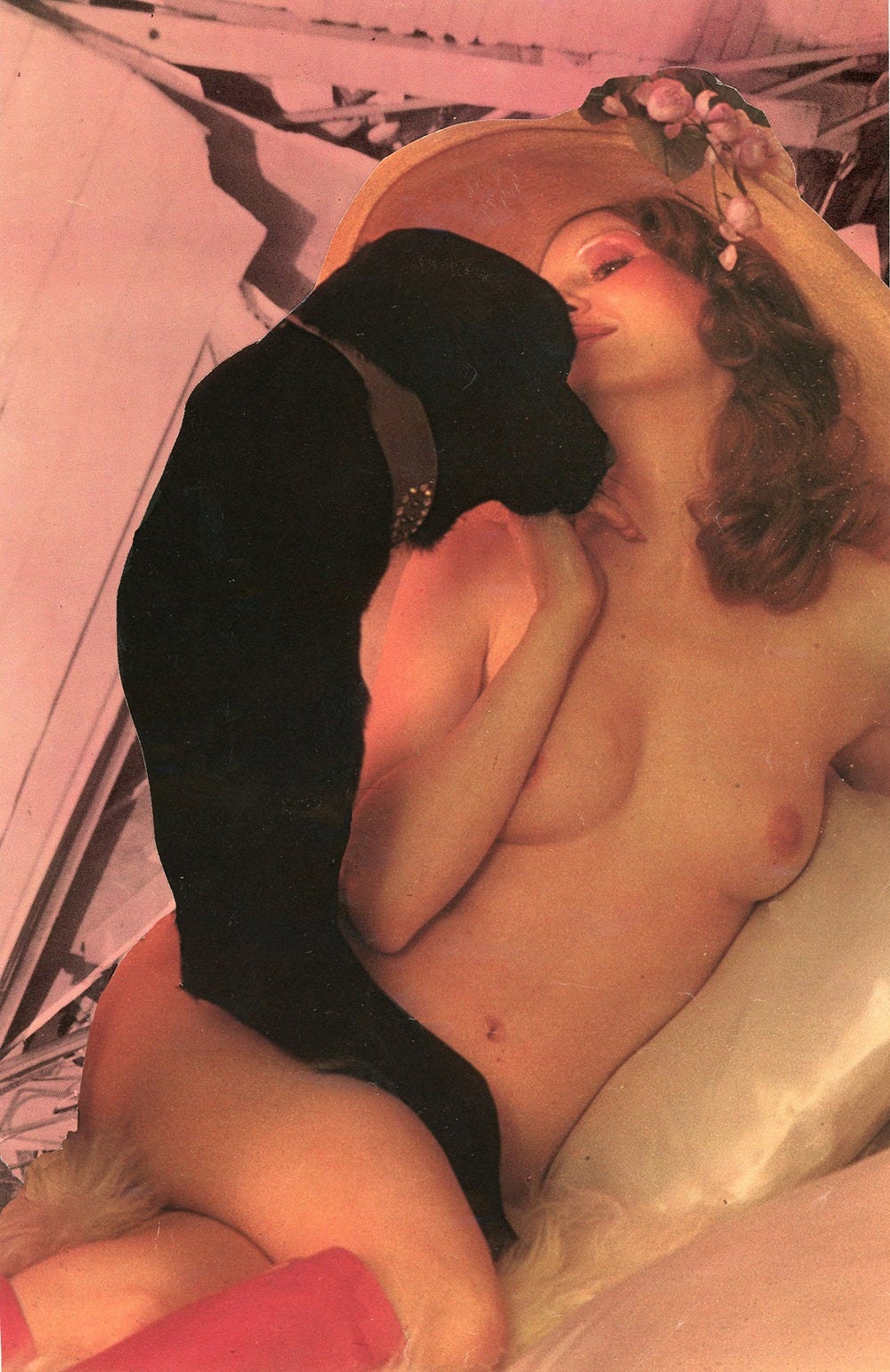
Take, for example, the nudity I’ve been showing you. Have I violated your eyes? Assaulted your sensibility with some vintage porn? I must defend this exhibitionist atrocity. Don’t shy away from what’s real. Push through and discover a deeper truth: you can’t be certain of what’s really real (the source of my fright and concern), and then elevate this unknowability into the surreal. You know what, we never actually defined the word. From Billet’s essay: “Surréalisme, a word coined by Guillaume Apollinaire in 1917: sur, meaning “beyond,” and réalisme, “realism.”
Beyond real.
A paraphrase within another quote. In his post, THE HIDDEN DISEASE THAT MIGHT BE SECRETLY KILLING YOU8, Gnostic Pulp cites Conner Habib as saying “one of the most important spiritual practices of the modern age is to periodically acid wash all of our accumulated beliefs so that only what is True remains. What is a fever but the body’s acid wash? How exactly one goes about doing so in the soul and psyche, however, is another matter.”
Use this passage to explain why a common compliment to Weird Fiction is “fever dream.” Sometimes the best medicine for the paralyzing horror of the real is something that blasts that horror in the face with radioactive acetone. Mutate reality beyond its current limitations. That’s not an escapist fantasy: that’s evolution—the realest thing there is—nature’s only technology—the holistic map for the intrepid zygonaut.9 It’s how every single living thing has survived, by ferociously shapeshifting around the stolid challenges invented by entropy, always dragging on our tale.10
Planetoid Sassafras is an antidote for someone like me, whose misanthropy flares like a congenital rash. The book celebrates pleasure and joy, diagnosing the cosmos as an unremitting fuckfest of flesh and flare. The only question is, do you say yes to that? Do you consent to the possibilities of your own body? Are you kidding? All of it terrifies me! The things my body can do? Must do? What do you think those awful books are named after? The Atrocity Exhibition. The Soft Machine. Blood Meridian.11 Horrid tales of what the body makes possible and no satisfying answer as to why God gave it to us.
If we view the universe as formed from conflict, then the Sassafrasian perspective modifies the models of Yin/Yang and Eros/Thanatos into the same binary: Life is an omnidirectional vector with Death dragging on it with perfectly natural thermodynamic entropy. Being creates itself by pulling away from Nonbeing, and the friction of this force forges all physical reality with the epic weight of a heavy metal cosmogony.
Per the interview, Klein labels all “Evil” under the personless force opposing all persons, harshing this traffic light’s vibe. They summarize the malevolence of the universe as the command to STOP. It’s funny, ‘cause that’s what I envision yelling at God as he breaks this poor universe’s hymen again and again with each new living thing, born to suffer and die. At the risk of putting words in their mouth12, Klein says, “fuck that!” We are born to live, and death is simply the cessation of that positive activity. And y’know what? They might just be right. As the good book says:
With each and every fuck we will pursue the philosopher’s stone of the mucus membrane, creating our new lives within a Venereal Metallurgy. We will break these limited material bodies upon the wheels of cellular invocation, discovering each forgotten ecstasy & vice within.
“Embrace the intersphincteric mind and be set free,”
Thus Spake Pudenda & Prick.
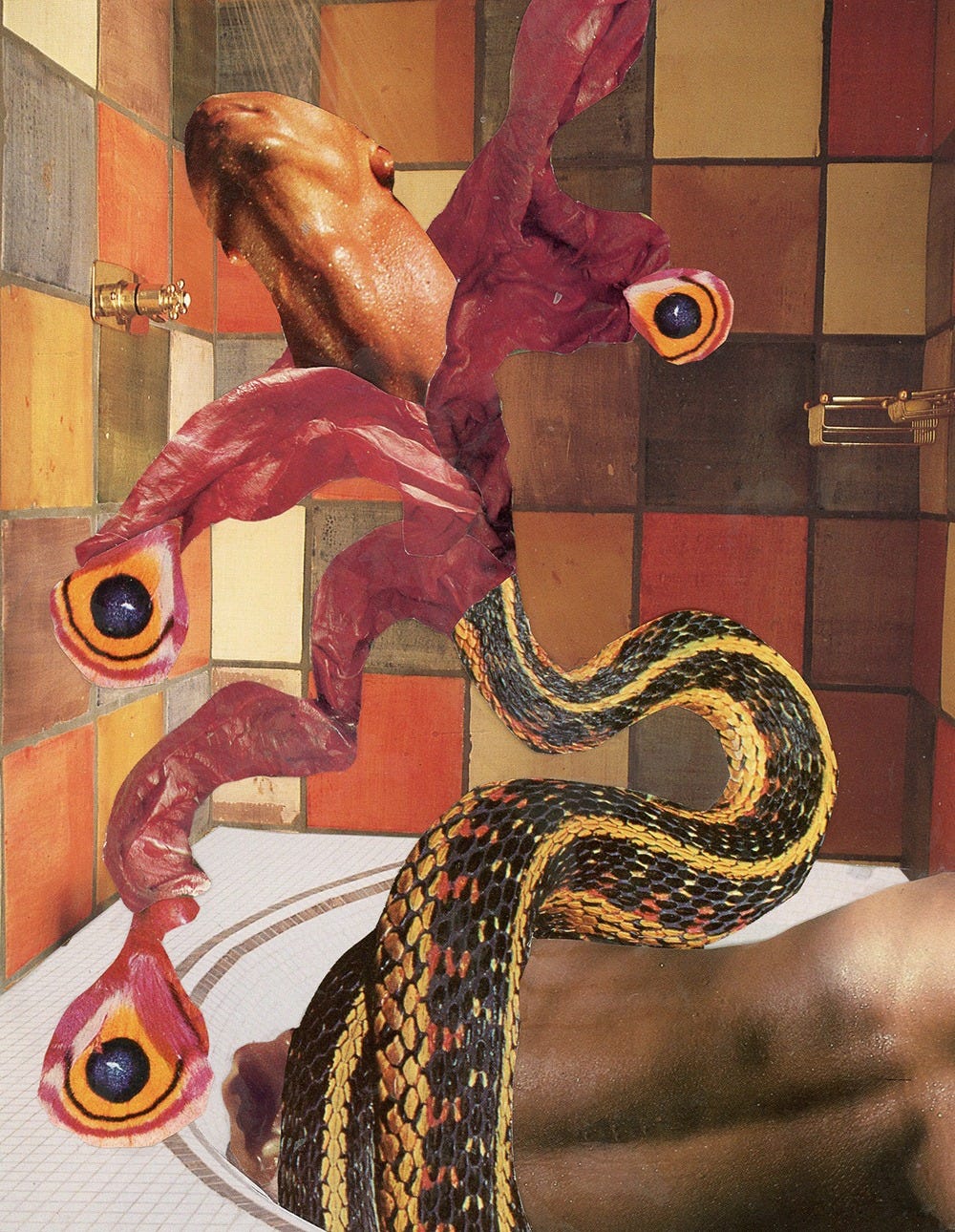
DB: Thanks for salvaging my terrible question with a very interesting answer. Real tasty, indeed. Okay we’ve helped the horse-surgeon with the enterolith (which I honestly only brought up ‘cause it’s such a badass word). Thank you for cutting the umbilical; I didn’t know horses could get knocked up by sediment deposits.
SK: Hey, I think I saw some of those once at Transylvania University in Kentucky, along with the world’s largest hairball. I happened to be at a cryptid convention nearby and took a quick side trip to the university’s Moosnick Museum. All of this is actually true. (Look it up!)
DB: Ugh, I love true stories. Fiction is a bitch. I’m pretty much done with the whole under-chair world journey. Fittingly, we didn’t learn any lessons. Thanks, surrealism. That stuff about gay alien sex and liberatory queer fantasia reminded me: some of the Planetoid brought to mind William S. Burroughs’ most impenetrable writing, and yet this is penetrable (pun intended). Do you consider Burroughs an influence? I need to ask ‘cause his character Dr. Benway is my bastard father and I’m still looking for him.
SK: It’s funny, I seem to orbit around him intellectually but never land my little spaceship on his funny head. Never read a single book. But I guess I’ve absorbed some trickle-down Burroughs through Cronenberg and the industrial music scene. Conversely, I think Burroughs probably absorbed some trickle-down surrealism through Brion Gysin and such, so perhaps that’s how we landed on parallel evolutionary paths.
DB: That’s okay, he’s a wife-killer anyway. Burroughs, not Benway—although Benway did kill my mom, but they weren’t married, so same diff. Oedema of Head (incidentally my favorite) was a wonderful poem that folded supposedly dead matter into the panpsychic family. How animist are you, really? Where does consciousness originate?
SK: I dunno, but some of my best conversations I’ve had have been with vines and trees. I think all consciousness probably originates in my left toenail. So sorry for the sock fuzz, friend.
DB: Someday I’ll find it in my heart to forgive you. That explains the finale of your story Belly Mundus (no, wait, this one’s my favorite). What’s your limit? What actually disgusts you?
SK: Coercive sex, the rest is gravy.
DB: Yet another disarmingly heavy answer. Let’s keep it up: where does evil come from? I’ve been asking everyone I know; figure I could piece together a good super-answer. Do you think humans have cracked the evil code, or do we receive it from nature?13
SK: Really, I guess evil for me would be something like that which deflates the ecstatic aka Eros aka life. Unfortunately, it appears the vast majority of our cosmos is flaccid and unliving, at least in a non-animist sense. Empty space. Do I then see it as an evil cosmos, like the gnostics? Well, that’s one way to look at it. But it’s a funny reversal of their reasoning, eh? In that case, the job of every good Gnostic Sassafrasian proselytizer would be to implant life way out there, to spread the funky life-virus. Tardigrades on the moon! Sloths hung from each of Saturn’s rings! Fungal spores sewn tight in the belly of Europa’s second sight!
DB: Groovy! I like this answer because, as a doctor, my battles are fought with forces that seek to derange healthful energies. Those forces are often defined as living things themselves (viruses are half-dead or some such shit). I’m intrigued by the premise of the ethics of disease eradication. Imagine: a nature preserve for viruses! Bacteriophage rescues! Free-range diabetes! Additionally, that gnostic reversal you mention is the perfect occult jam frequency. If each living thing contains the Divine Spark, then fucking drown the abyss with life. Spark up a lightning storm and sing the body electric! Let’s yang samsara’s yin! It’s all squishy maya, anyway! Party on, dude.
The Planetoid pairs well with The Joyous Cosmology by Alan Watts, a book I gobbled in a single sitting the morning after my first acid trip. That reading integrated a psychedelic epiphany I had the night prior: Creation is play. The gift of being alive gives license to fuck around with these blobs of self we’ve been granted, if only for a moment. Yes, that also means The Horror festering in the open space like a mold patch. When that happens, grab the antiseptic spray, and let’s dance.
God, the grinning rapist, the idiot archon, the absent-minded watchmaker. How about the babbling baby? Farting out the cosmos and bequeefing us the perfectly natural giggle in reaction. The cosmos between the two pre/post-life voids is playtime for these bits of sentient something. We always forget to play. We keep turning it into The Work (dusty musty ass alchemists turning magick into fucking homework).
Klein’s art and writing is very obviously an exercise in remembering this lesson. You are a nodule of flesh knotting up myriad erogenous vectors in the universe’s psychostratic genitals. With every motion, every word, every breath—you are making love to reality. It is making love to you (if you let it). You are one and the same. We are all cosmic masturbation. Life is a polyculous endeavor to stave off the void, which itself is just one supermassive cunt from which life incessantly sluices. In my writing, I have regarded this pageant as an ontological violation from toe to tip. Klein thinks it’s sexy as fuck.
The lesson I needed to learn was to affix an essential prefix phrase to my albatross: “Someone is trying to convince you that…” Human consciousness is a mirage flaming at the corners of surreality. The dark notion rattling around my skull, that’s the ideology they are trying to force down our throats like a—well, you know. To inoculate ourselves against The Doom, we need reminders that life is actually a goddamn miracle in every improbable second that it continues, and that it is always transforming into something else. They want to transform it into more Horror. The only two options are STOP and GO. Which will you do? Neither is good, neither is evil, they both simply are. That’s the Tao, baby.
I think I was drawn to the book because I could never write it. Not only because it’s the deft product of a skilled veteran surrealist, but because it comes from a place so enthusiastically joyful about the flesh. Klein trusts the flesh. Maybe I need to, from now on. In my writing, all the symptoms of evil in the world can be traced back to the body and its endemic disorders, but Klein seems to regard the body as the launchpad for liberation. Revolution, even. I’m sure Klein does have fears and views with world awakened eyes; that’s what makes this level of joy so courageous. Even masticating on the breathless terror that our bodies experience, we can still chew the cud of nourishment. There are still good things about being alive, remember? Sassafras remembers.
DB: We’re gonna wind down with Jukebox Questions (stole this from Banzaï Editions).
Top 3 Songs / Bands / Noises out in the world:
SK: There’s an old Gamelan album called Golden Rain I found at a record store that has some amazing tracks, including the famous monkey chant. I’ve put that one on for years while I write or do collage. The band Coil is another big inspiration too, especially Horse Rotorvator. And you can’t go wrong with the bird list song from Peter Greenaway’s The Falls.
DB: Top 3 Movies:
SK: Videodrome (obviously!), Serial Experiments Lain, and Tetsuo: The Iron Man are usually top billing for me, though sometimes Jodorowsky squeaks past Tsukamoto to nab that tricky third spot.
DB: Top 3 Books:
SK: The Leg of Lamb: Its Life and Works, The Three Stigmata of Palmer Eldritch, and Maldoror crawled inside my brain and rewilded it completely. I think they’re probably still swimming around in there somewhere, leaving pornos lying around and running up my electric bill.
DB: Top 3 works of visual art (if you simply can’t pick three, then default to Video Games):
SK: Max Ernst’s Une semaine de bonté, and the erotic collages of Jindřich Štyrský. I was also obsessed over Shin Megami Tensei III: Nocturne for years. Its occult atmosphere does a number on me.
DB: Top 3 items to take along when exploring a new planet/plane of existence:
SK: Café Bustelo instant coffee, a carton of menthol cigarettes, and a 24 pack of the champagne of beers. I don’t know if they’ll have vices where I’m going.
DB: Okay last question, possibly the hardest hitting one of all: Animal, mineral, or vegetable?
SK: Vegetable, definitely. I would much prefer to be a jungle rather than a bipedal thingamajig. And there’s nothing more erotic than a profusion of slick, fresh leaves. Really, each time you humans cut down a forest, it’s like you castrate yourself. So good luck with that, I guess. Good luck getting off inside an un-erotic cosmos…
DB: Thank you for taking the space-time to speak with me. And for the help down there in the symbolist ünterchairmos or whatever the fuck. I owe you a latte! If there’s anything new you’re working on and would like to promote, squawk it.
SK: I finished up a collection called “I Live Inside the Sun” recently, though I’m still waiting on a publisher to take a bite. It’s a bit sleepier than Planetoid Sassafras, more Octavio Paz than Bataille this time, but I hope the primordial soup still digs it when it finally comes out.
DB: Lovely. Can’t wait to sting my grumpy eyes with it. Goodbye! Oh, this is always awkward. We parked on the same street, and now we’re walking back together, but we already said goodbye. Aw, poo. Um, anything else? Was there anything you wished I had asked you?
SK: “Which corpse makes the best hat?”
BD: Damn, you’re right, that’s really good. I wished I had asked it. Now we’ll never know the answer.14 Okay, I’m at my car now. Bye for real!
SK: Happy asparagus day.
My only complaint about the book is that it’s too short—just a skötch over 83 pages white as egg shell—but that’s to be expected. This kind of material can’t keep itself hard for that long. Instead, they ordain a series of swift & powerful orgasms blinking like distant stars or migraine flashes in your vitreous humor. Reread them and discover new connective tissue you didn’t lick the first time.
Final thought: I consider Planetoid Sassafras’s phantasmagoria to be startlingly similar to the psychedelic horror I depict in my own book, Drippy Trippy Doom15, but Klein flips the bird on its head. Their cosmovision is fueled by an unembarrassed embrace of life in all its pulsating intensity. Sassafras is the Good Trip to Doom’s Bad Trip. An enthusiastic consent declared between parties existing in realities both possible and impossible.
I’m beginning to think my nightmare of the real is actually just a claustrophobic reproach against the gummy embryonic barrier of my current existence. I need to trust the body. Your miserable little life is an amniotic sac. Break it. Crack the egg with your hardening beak. The borders of the gestative state need always tighten most unbearable—this forces the subject to push out and become, split from the wound of the womb of the world. Go beyond the real and define the term for yourself. This is the only way Creation happens. Be created. Create yourself.
The delicious words of Planetoid Sassafras are the chungly glue seeping between solid thought, ever present, ever powerful, hard to make out with virgin eyes. So drink deep and dance macabre with the starseeded children of thigh-born Dionysus! Better yet, pucker up and snack on the smacked lips of amorphous and amorous Hermaphroditus!
Give yourself up to the experience.
Fuck it.
If you are interested in acquiring a copy of Planetoid Sassafras, you can go into your bathroom, stand on the sink, and lick the spots of your ceiling that have begun to peel and crack from moisture. The resultant scum will copulate with your gut flora to metabolize an exohormonal glycerin which will shit out your bellybutton. Rub this pansexual jelly on your junk, and it will dissolve and reshape into biomechanical printing press genitals. Jerk off, and the book will cum out.
Otherwise, you can just buy one here. Prude.
Final plug (I swear): if you are interested in more of my writing, you can subscribe to Doompunk Dispatch. Also consider purchasing my Weird fiction collection. I’m proud to say Stephanie Klein enjoyed reading it! :)
In conclusion, I would like to express enormous gratitude to Stephanie for collaborating on such a fun interview. In the words of the bard: happy asparagus day!
Nevada (2013). In the 2023 afterword, Binnie claims she stole this line from a friend.
Insert “Gay Agenda” joke.
for real.
I can’t be bothered to confirm.
Waterbears, that is. Klein’s handle is Hermetic Tardigrade, after all.
This sounded familiar, and I later remembered this joke was from this interview with Garth Marenghi on Man to Man with Dean Learner. I’m sure Klein’s joke was—much like the book in Bendigan’s petri dish—an innocently grown parallel.
Actually, I discovered that Bendigan wrote this answer (and “meta for what”) because he actually made both jokes in the original transcription. When they didn’t get a laugh, he tried to ventriloquize them into Klein’s mouth to make him look funnier. I, the final editor, must set things straight. Bendigan brings up pataphors every chance he can, because he’s the world’s only pataphysician (self-proclaimed). It’s one of his word-viruses.
Oh look, in this piece he quotes and praises Drippy Trippy Doom. Shameless plug!
Coining it here first, folks.
Yes, the spelling’s on purpose, you pedantic nerd.
Maybe there’s a reason these are all dudes’ books.
Although, I think they’d be into that.
In the first draft, Bendigan worded this “Does evil come from within us or from beyond?” without realizing he was quoting Robert Eggers’ Nosferatu (2024). Quite randomly, I recommend you read Scarey (they/them)’s essay on the film.
my money’s on John Dillinger.
Another shameless plug, this time by me. Naughty!
 | A guest post by
|
This one interview resulted in three separate subscriptions. Thank you.
Sounds interesting. I'll add Sassafras to my reading list. I love Cronenberg’s adaptation of Naked Lunch, and I’m currently reading Burroughs’s novel.